
Rare and Unusual Wildlife Guide
Rare and Dangerous Animals of the World
Small, rare, unusual, or surprising animals that can be dangerous when disturbed.
Back to guidesRare, Restricted, and Unusual Do Not Mean the Same Thing
Some animals feel rare because they live only in a small part of the world. Others are hard to notice because they hide on forest floors, reef rubble, murky riverbeds, or remote islands. A species can be geographically restricted without being equally scarce in every suitable habitat, and an unusual body or defense does not automatically mean an animal is endangered. Conservation status must be considered species by species rather than assumed from a dramatic reputation.
The nine animals in this guide are connected by surprise more than by taxonomy. They include an amphibian with skin toxins, venomous marine hunters, a defensive fish hidden on the seabed, island reptiles and birds, and freshwater fish with electricity or famous teeth. Danger usually depends on disturbance, accidental contact, handling, habitat entry, fishing, or local conditions. Their normal lives are about food, shelter, reproduction, and survival—not searching for people.
Featured Animals
Nine Unusual Animals With Remarkable Defenses
Habitat Context
Forests, Reefs, Rivers, Islands, and Seabeds
Tropical Rainforests and Forest Floors
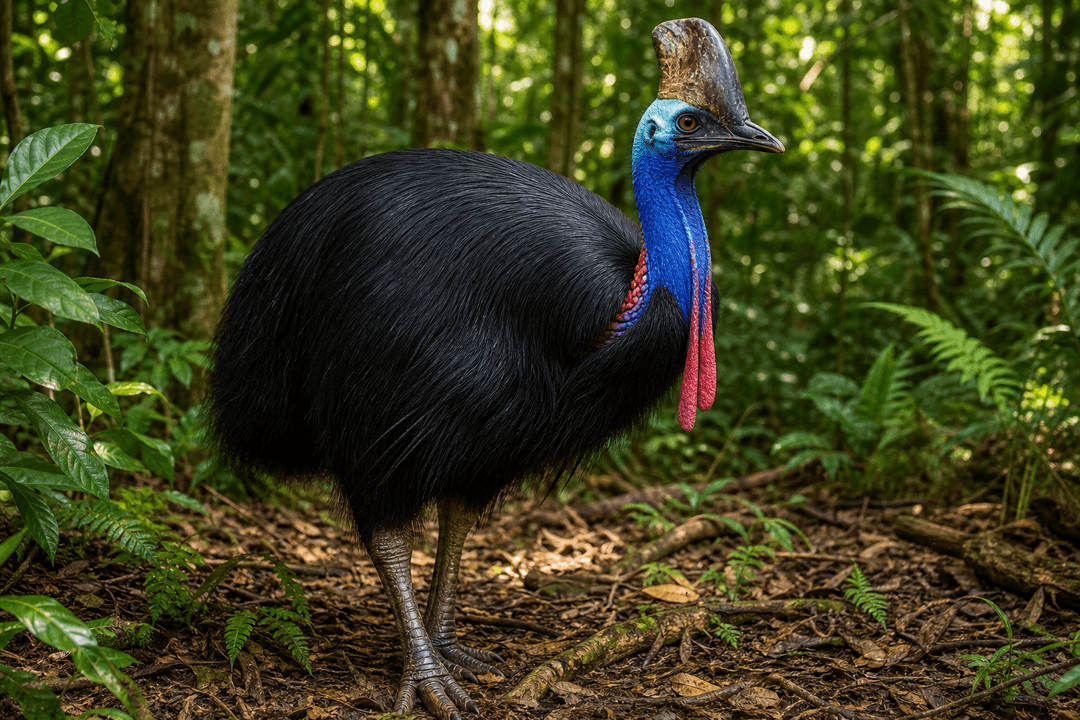
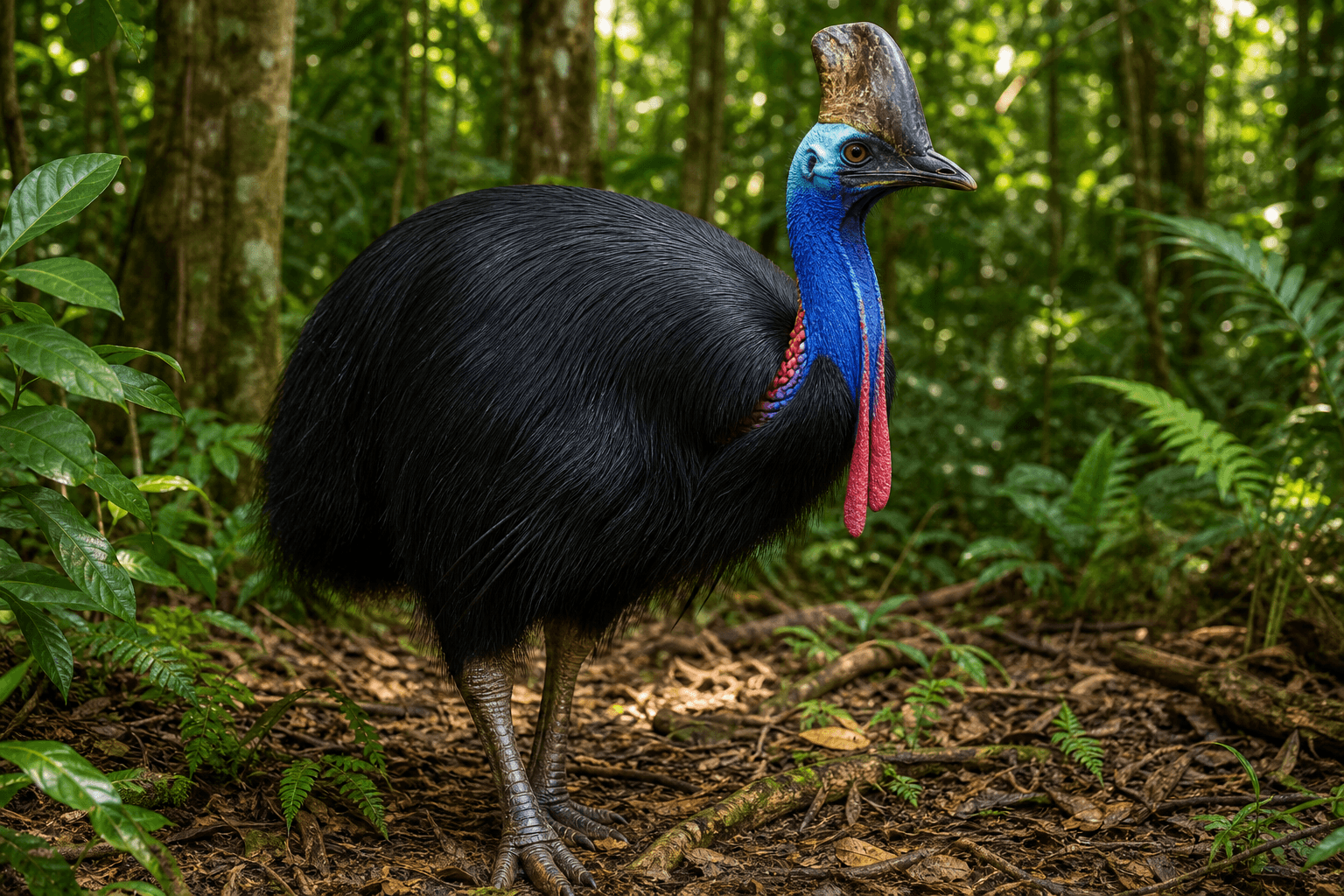
Cassowaries cross broad rainforest landscapes, while poison dart frogs depend on damp leaf litter and tiny water features. One habitat can operate at very different animal scales.
Coral Reefs, Tide Pools, and Tropical Shallows
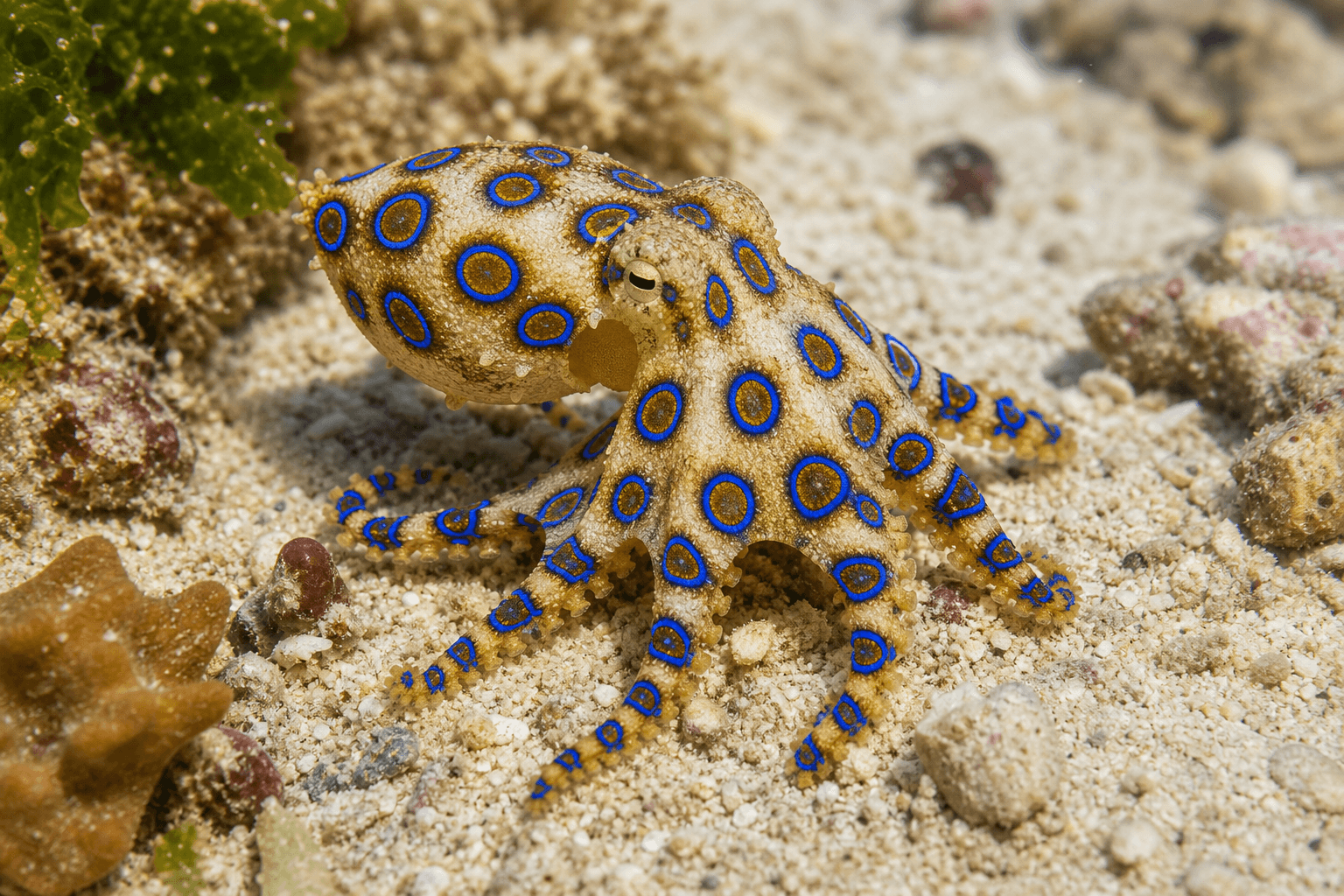
Crevices, shells, reef rubble, and warm shallow water shelter small marine hunters. Handling and unseen close contact explain risk better than stories of pursuit.
Rivers, Flooded Forests, and Freshwater Basins
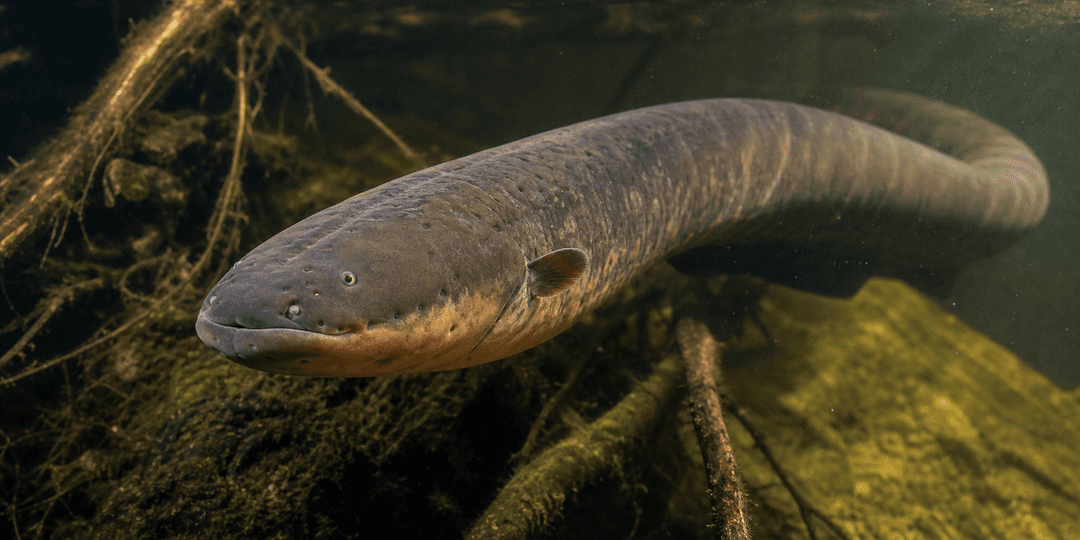
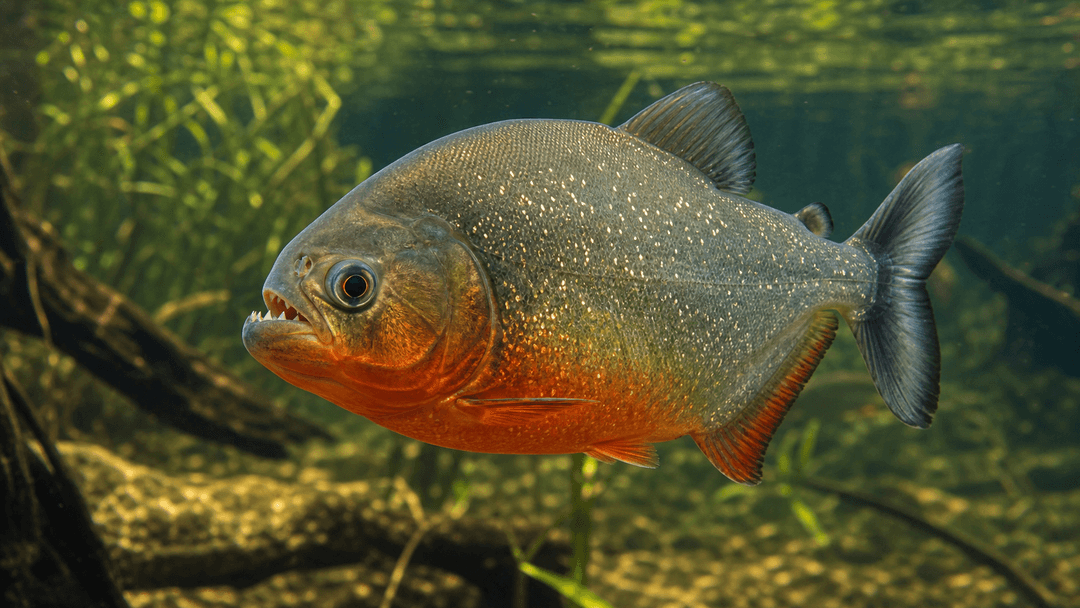
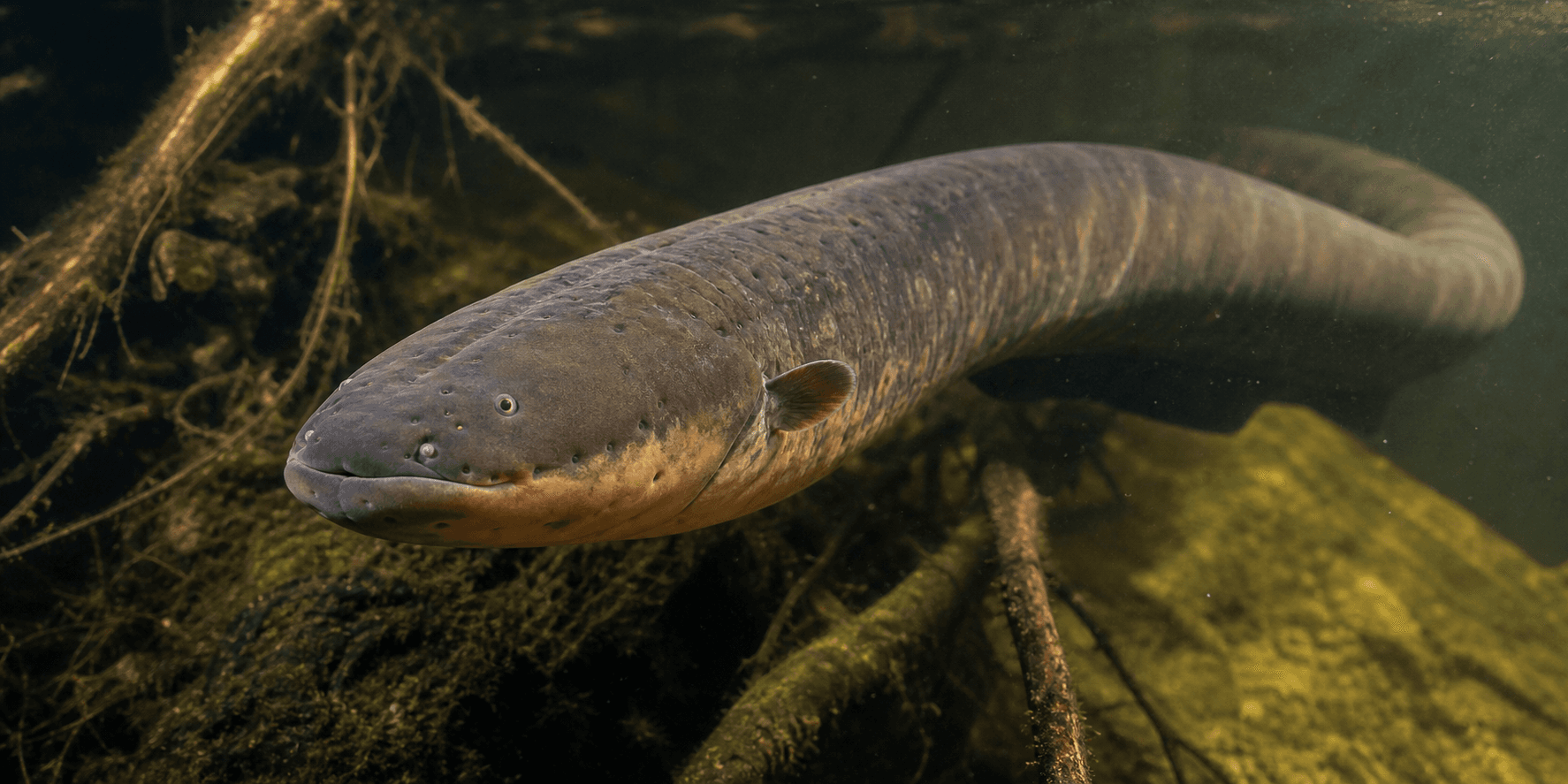
Electric eels and red-bellied piranhas belong to dynamic South American waters shaped by floods, visibility, food, season, and connections between river and forest.
Islands, Savannas, and Tropical Woodland
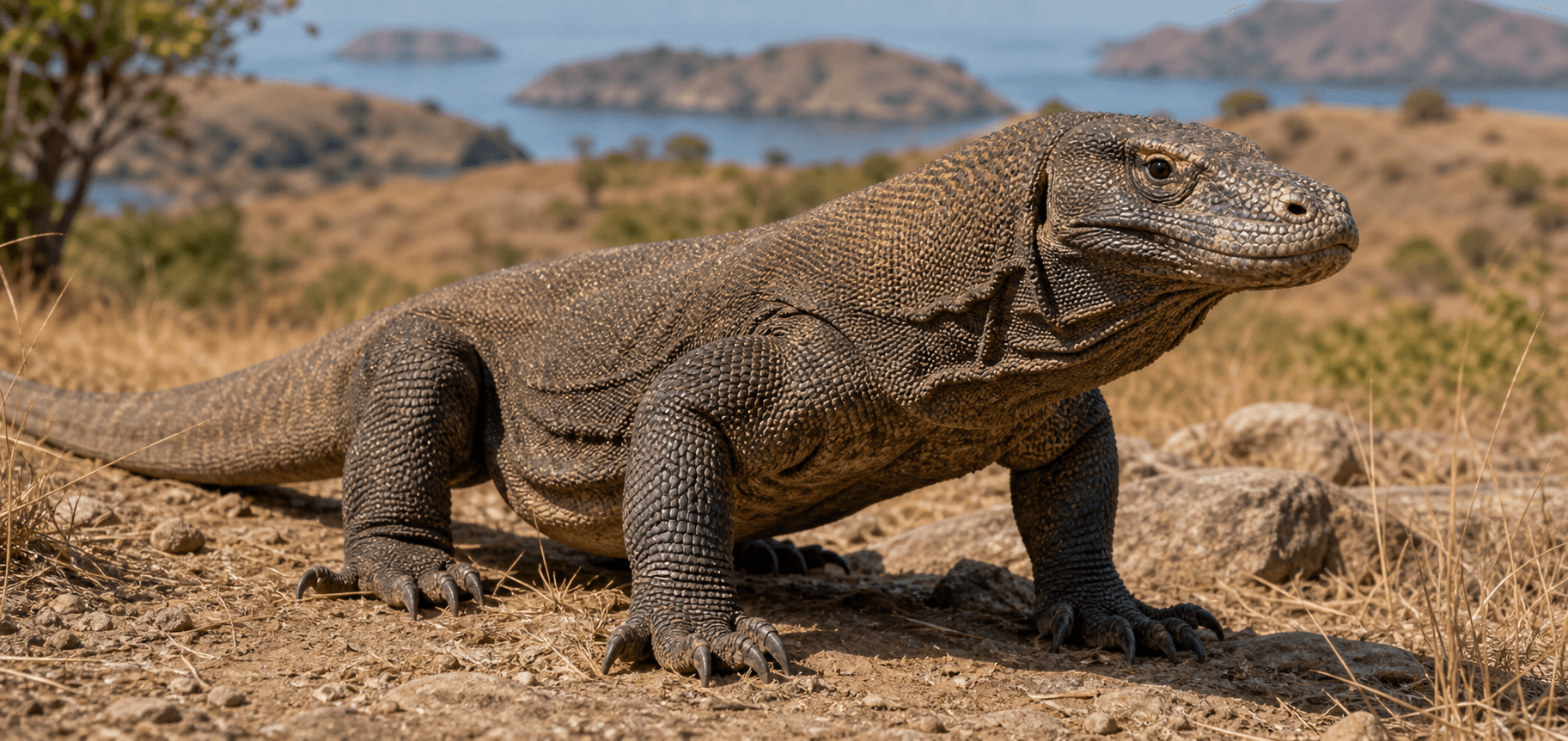
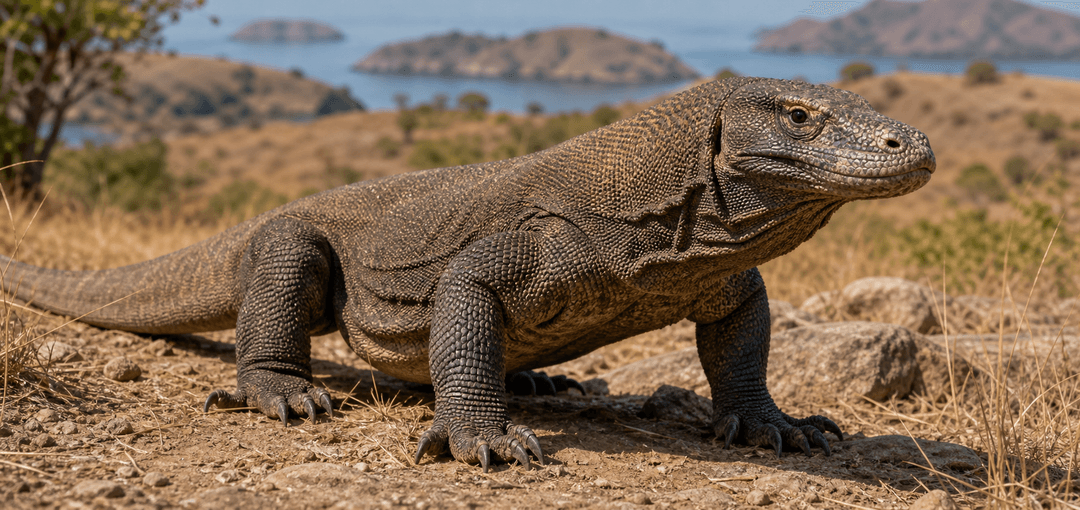
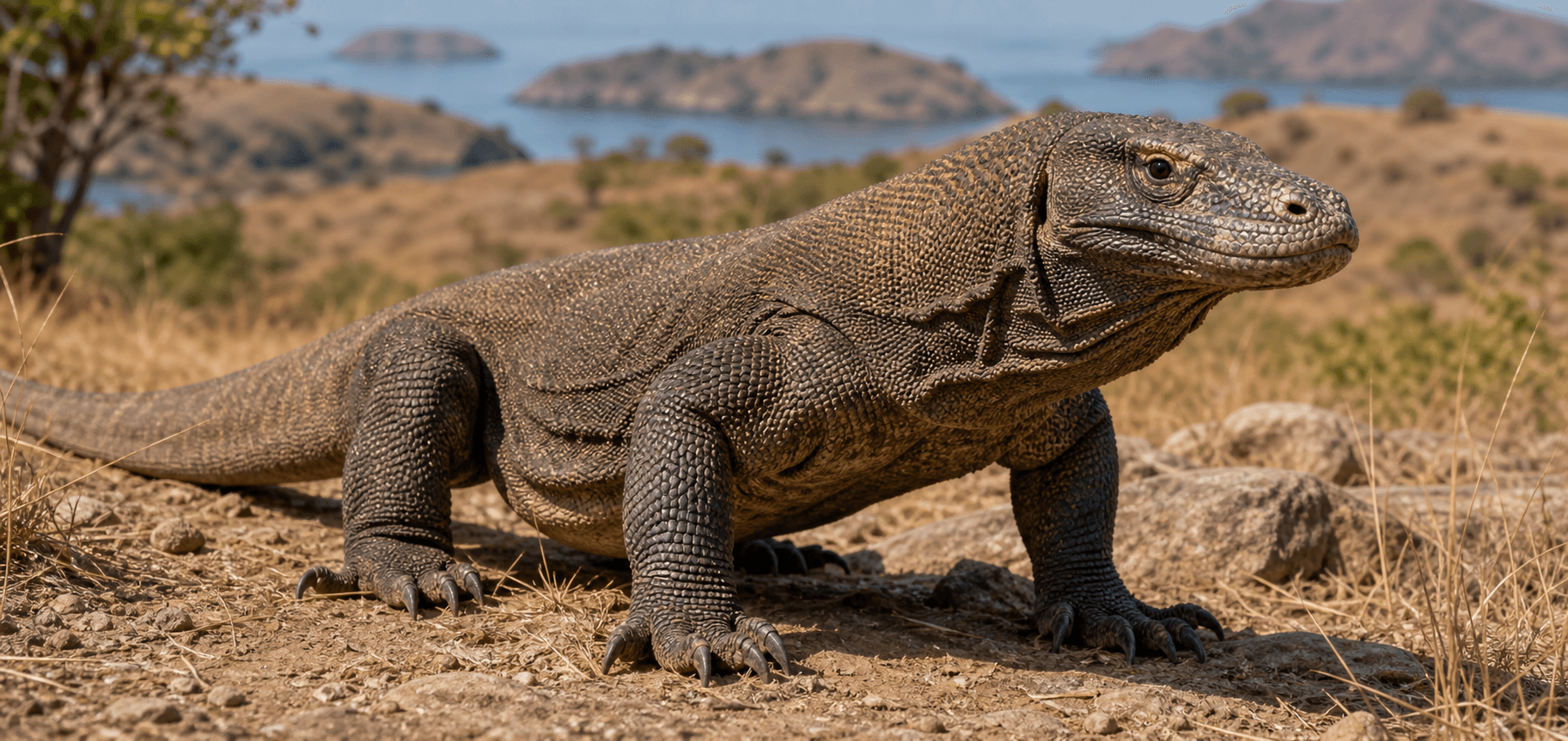
Komodo dragons are tied to a restricted Indonesian island range where dry grassland, scrub, woodland, forest edges, and seasonal resources support large reptiles and their prey.
Coastal Seabeds, Sand, Rubble, and Reef Edges
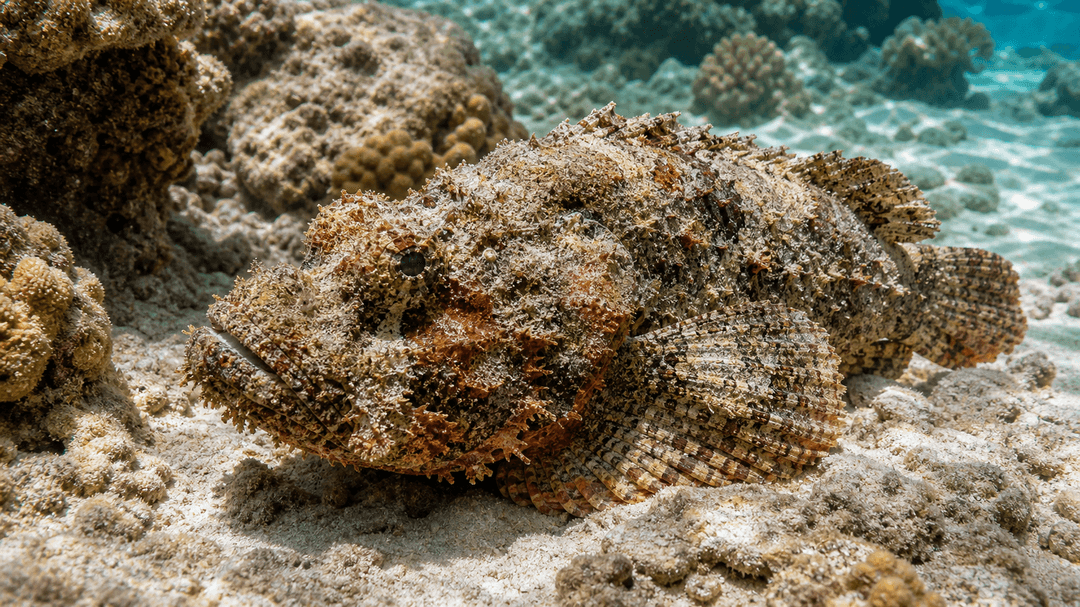
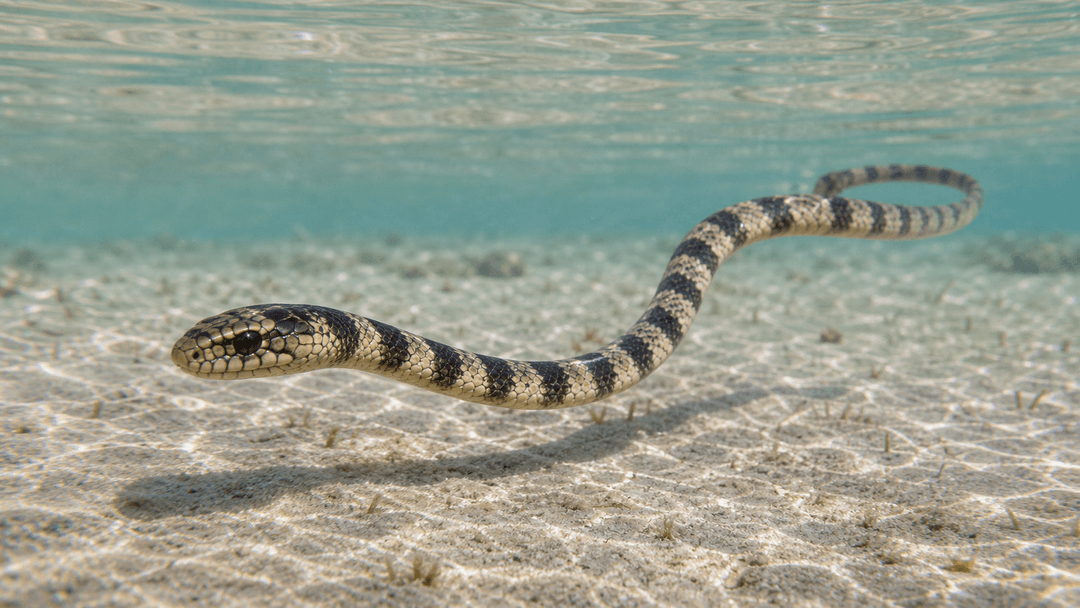
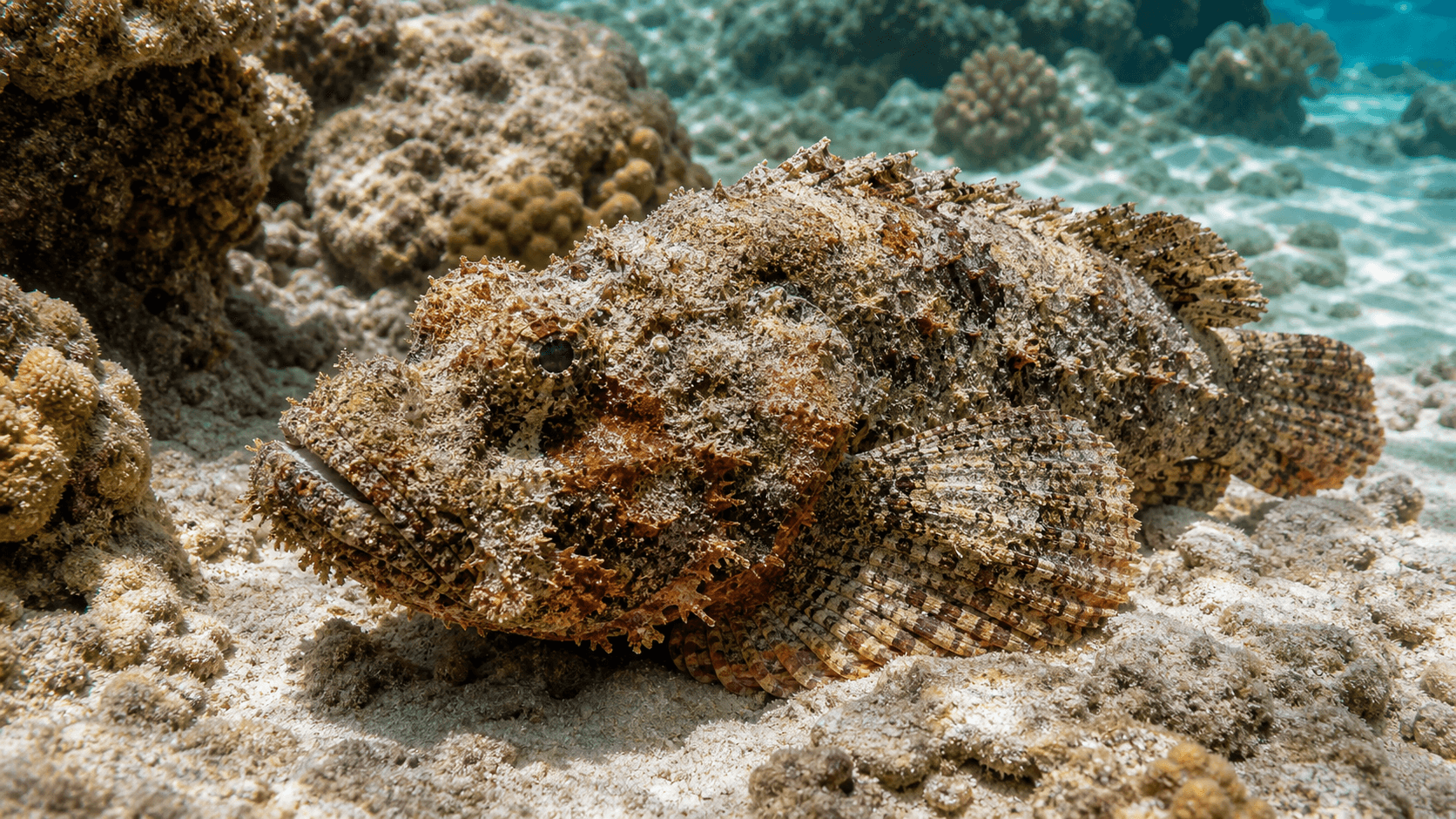
Camouflage and shelter matter along tropical seabeds. Stonefish, cone snails, and sea snakes use different parts of this coastal mosaic, so local habitat detail matters.
Animal Profiles
Behavior, Ecology, and Realistic Risk
Poison Dart Frogs on Tropical Forest Floors
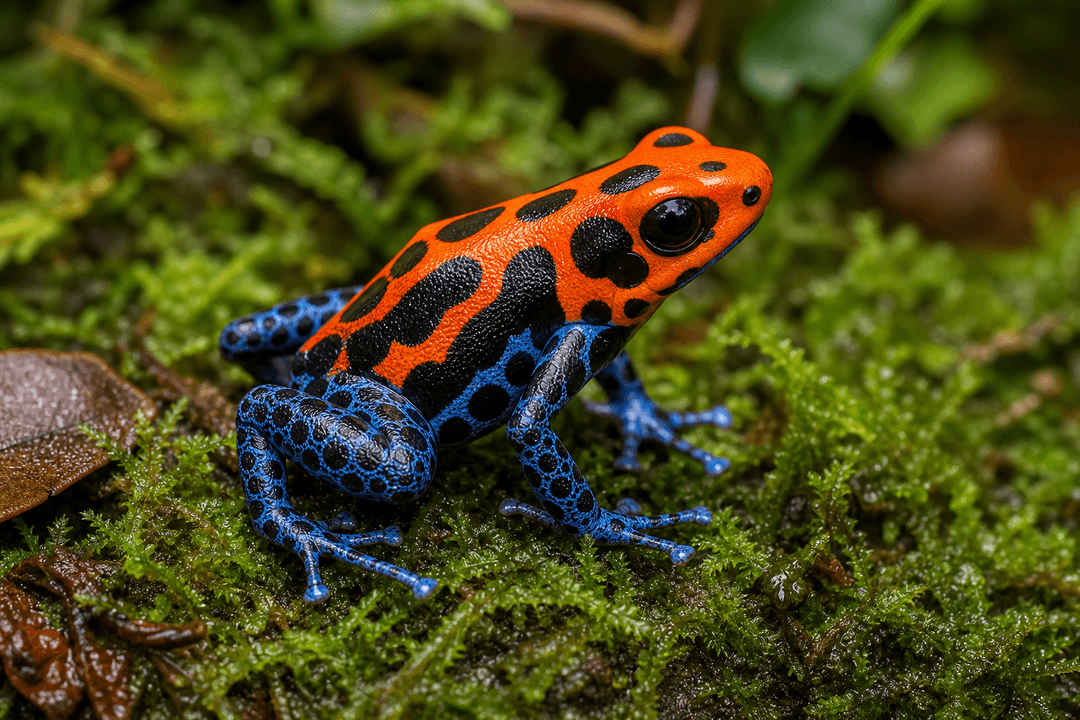
Poison dart frogs live in tropical Central and South America, with different species using humid rainforest floors, leaf litter, low vegetation, stream edges, and tiny pools where moisture supports eggs or tadpoles. Their bright colors can act as warning signals. Some wild species carry powerful skin toxins linked to compounds obtained through their natural diets, but toxicity varies greatly among species and populations.
These frogs are poisonous rather than venomous: toxins are present on the body instead of being injected by fangs, spines, or a sting. They do not chase, bite, or attack people. The realistic lesson is not to handle wild frogs. Poison dart frogs also eat small invertebrates and form part of intricate rainforest food webs, making them indicators of the damp microhabitats on which many smaller species depend.
Blue-Ringed Octopuses, Cone Snails, Stonefish, and Sea Snakes
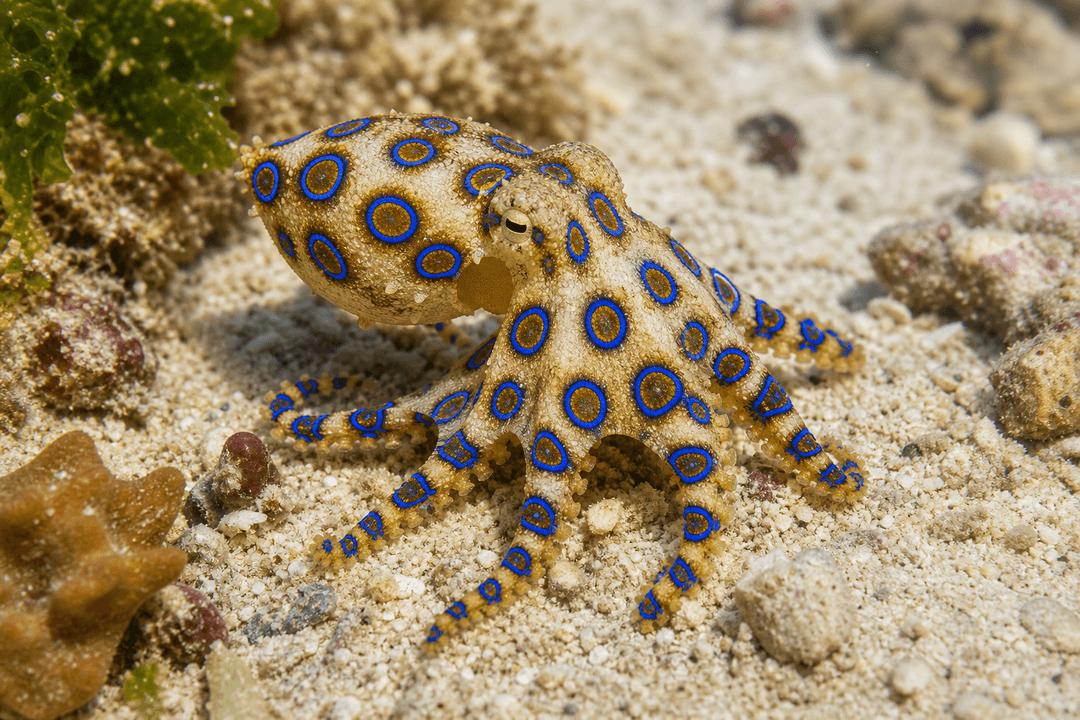
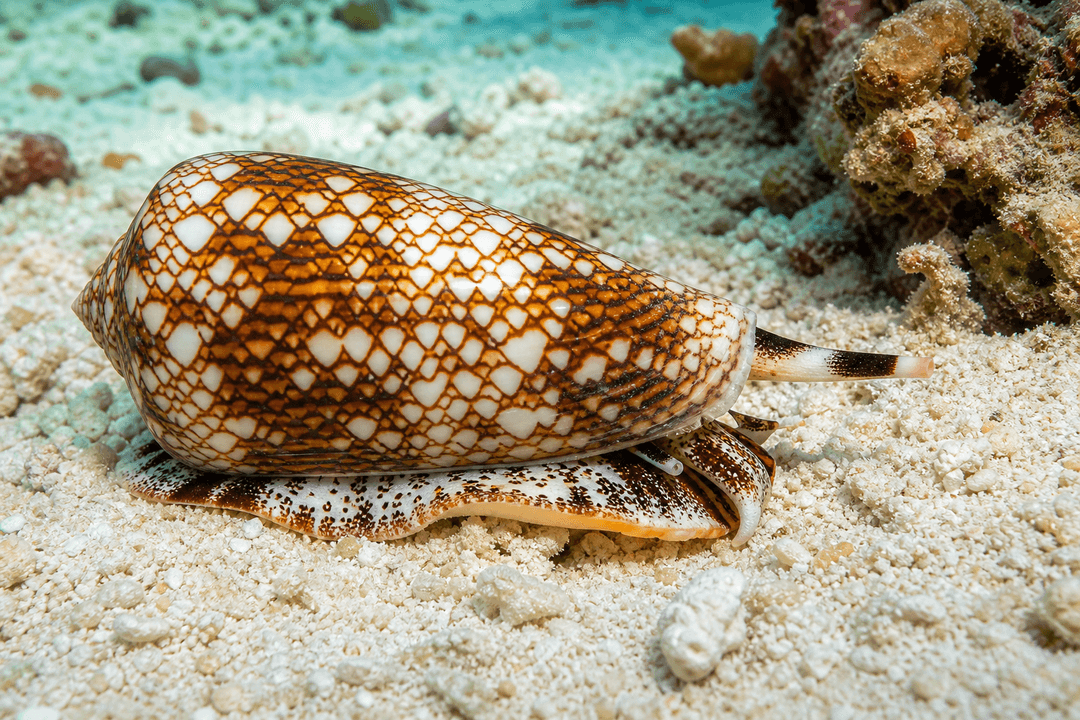
Blue-ringed octopuses occupy shallow Indo-Pacific tide pools, rocky reefs, coral rubble, shells, and crevices. Their vivid rings are a warning display, especially when disturbed. Geography cone snails live around tropical Indo-Pacific reefs, sand, and rubble, using a specialized venom-delivering tooth to capture prey. Both animals are usually small, secretive, and easy to overlook. Their realistic risk comes from picking them up or reaching into shelter, not from pursuit.
Stonefish blend into sand, mud, rocks, and reef debris on tropical Indo-Pacific seabeds. Their dorsal spines deliver venom defensively when pressed, so accidental contact matters more than aggression. Beaked sea snakes use warm coastal waters, estuaries, mangrove-influenced areas, and soft-bottom habitat around the northern Indian Ocean and western Pacific. They are venomous marine reptiles, but fishing nets, handling, crowding, and close contact explain risk better than the myth of a snake hunting divers.
Komodo Dragons and Cassowaries
Komodo dragons are large monitor lizards native to a limited group of Indonesian islands. They use dry savanna, open woodland, scrub, seasonal stream areas, beaches, and forest edges where prey and shade are available. They are powerful predators and scavengers whose feeding helps move energy through island ecosystems. Their restricted range makes them geographically special; it does not turn every island path into an encounter.
Cassowaries live in tropical forests of New Guinea, nearby islands, and northeastern Australia. They travel across forest floors and edges eating fruit and helping disperse large seeds, an ecological job that supports rainforest renewal. Their size, strong legs, and casque make them look prehistoric, but they are not roaming forests to attack people. Risk rises when a bird is cornered, surprised, approached, fed, or defending space or young. Both animals deserve distance and local park guidance.
Electric Eels and Red-Bellied Piranhas
Electric eels live in freshwater systems of northern South America, including slow rivers, floodplains, creeks, swamps, and flooded forests where visibility may be low. They are electric fish, not true eels. Specialized organs produce electric discharges used for sensing, communication, hunting, and defense. Their ability is remarkable biology, not evidence that they patrol rivers looking for people.
Red-bellied piranhas also belong to South American freshwater basins. They use rivers, lakes, floodplains, and flooded forests, feeding on fish and other available material while also serving as prey for larger animals. Their sharp teeth are real, but the movie image of unstoppable swarms is exaggerated. Behavior changes with food, stress, water conditions, season, and local circumstances. Handling caught fish or unusual low-water situations is more relevant than a monster story.
How Habitat Works
Habitats Explain Why Encounters Are Uneven
Tropical rainforests contain layers of habitat at very different scales. Cassowaries move across broad forest landscapes, while poison dart frogs depend on damp leaf litter, small plants, and tiny water features. Islands, savannas, and tropical woodland give Komodo dragons a different combination of heat, cover, prey, and seasonal resources. Restricted geography can make an animal unusual even when it is well adapted to its local home.
In water, the pattern changes again. Coral reefs, tide pools, tropical shallows, reef edges, sand, and rubble shelter small venomous animals that rely on camouflage or hiding. Rivers, flooded forests, and freshwater basins support electric eels and piranhas. A habitat label shows where an encounter could make ecological sense; it does not provide a live location, population count, or guarantee of danger.
Regional Examples
Regional Examples From the Tropics
The tropical Americas connect poison dart frogs with humid forest microhabitats and electric eels and red-bellied piranhas with the Amazon, Orinoco, and related freshwater landscapes. Even within these enormous regions, species occupy particular waters, forest types, and local conditions. South America is not one uniform wildlife zone, and seeing a region highlighted on a learning map does not mean every river or trail contains the featured animal.
The Indo-Pacific links many marine animals in this guide, from blue-ringed octopuses in shallow rocky shelter to cone snails and stonefish on reef edges and seabeds. Beaked sea snakes add estuaries and warm coastal water. Indonesia's Lesser Sunda Islands provide the Komodo dragon story, while New Guinea and northeastern Australia provide cassowary context. These examples show why global rarity and local presence must not be confused.
Myth and Reality: Surprising Defenses Need Context
Venomous and poisonous are not interchangeable. Venom is delivered through a specialized structure such as a fang, spine, sting, bite, or venom-delivering tooth. Blue-ringed octopuses, cone snails, stonefish, and beaked sea snakes are venomous. Poison dart frogs are poisonous because toxins occur on their skin. Komodo dragons, cassowaries, electric eels, and piranhas have other powerful adaptations and should not be forced into either label.
Popular myths exaggerate nearly every animal here. Poison dart frogs do not leap at people, cone snails do not fire across beaches, and blue-ringed octopuses do not stalk swimmers. Sea snakes are not constantly aggressive. Piranhas do not strip everything that enters a river, cassowaries do not hunt hikers, and Komodo dragons are not fantasy monsters. Each is a real animal responding to habitat, food, defense, and disturbance.
Practical Safety Is Local and Habitat-Specific
BeastAtlas is educational and cannot replace park staff, lifeguards, trained guides, fisheries authorities, wildlife agencies, or emergency services. On a rainforest trail, island reserve, reef, tide pool, river, or coastal seabed, follow the guidance for that exact location. Seasons, tides, weather, animal movement, and access rules can change conditions faster than a global guide can.
Useful habits are calm and consistent: do not handle unfamiliar animals or living shells, do not feed wildlife, keep distance from large birds and reptiles, watch where hands and feet go in natural habitat, and avoid interfering with animals in fishing gear without trained help. If contact or injury occurs, seek appropriate local assistance. Respect protects animals as well as people.
Presence Scores for Restricted and Unusual Animals
BeastAtlas Presence Scores are simplified educational estimates, not exact population counts, conservation rankings, live tracking, or safety guarantees. A high score means an animal is strongly associated with a broad region or habitat in the BeastAtlas learning model. It does not mean the animal is common everywhere, nearby now, or globally secure.
Restricted species show why the distinction matters. A Komodo dragon can be strongly associated with a small island range, while a cassowary can be closely tied to suitable forest within a broader region. Marine and freshwater animals may move with currents, tides, water levels, food, and seasons. Use the score to begin a habitat question, then use current local information for real decisions.
FAQ: Rare and Dangerous Animals
Are all these animals globally rare or endangered?
No. Some have geographically restricted ranges, some are difficult to observe, and some are included because their adaptations are unusual or surprising. Conservation status differs by species and should never be assumed from the word rare.
What is the difference between poisonous and venomous?
A poisonous animal has toxins that cause harm when eaten, touched, or absorbed. A venomous animal delivers toxins through a specialized structure such as a fang, spine, sting, bite, or tooth. Poison dart frogs are poisonous; the octopus, cone snail, stonefish, and sea snake are venomous.
Are electric eels true eels?
No. Electric eels are South American electric fish. Their specialized electric organs support sensing, communication, hunting, and defense in freshwater habitat.
Do piranhas attack everything in the water?
No. Red-bellied piranhas have sharp teeth, but the unstoppable feeding-swarm image is exaggerated. Behavior depends on food, stress, water conditions, season, and local circumstances.
Are cassowaries and Komodo dragons naturally aggressive toward people?
That description is too simple. Both are powerful wild animals that need distance. Risk is more likely when an animal is approached, fed, cornered, surprised, or when people enter habitat without following local guidance.
Reality Note: Unusual Animals Are Not Collections of Weapons
Every animal in this guide has an ecological life larger than its defense. Frogs eat small invertebrates, cassowaries move seeds, Komodo dragons act as predators and scavengers, electric eels and piranhas participate in freshwater food webs, and marine hunters shape reef and coastal communities. Their adaptations evolved for survival in specific habitats, not for starring in frightening stories.
Rarity, restriction, danger, and conservation are different ideas. The best learning response is curiosity paired with distance: ask where an animal lives, what role it plays, why contact happens, and which local rules apply. That approach makes surprising wildlife more understandable without pretending powerful animals are harmless.
Learning Takeaway
Rare, restricted, unusual, dangerous, and endangered are not synonyms. Connect each animal to its real habitat, ecological role, and encounter context. Leave wildlife undisturbed, use current local guidance, and let surprising adaptations inspire careful curiosity rather than fear.
Related BeastAtlas Pages
Presence Scores are simplified educational estimates. They are not exact population counts or safety guarantees.